Tuesday, April 22, 2008

Not Your Ordinary Bookmark... And an Old Dilemma


Am I right? Is that BLUE, not the luscious dark chocolate and gold? Or can I trust my crazy eyes? I promise I'll keep trying until I get this fixed, but blogger seems to be full or errors today.

Ah, as you see, it finally worked but with a different file. I started this one from scratch and I don't like it as well, because it doesn't have the contact info on the front, and dimensions aren't as good. But no problem-- the other one works fine everywhere but here.

Yes I haven't forgotten my blog. I'm up to my earlobes in coordinating the Royal Ascot for the next few days, and have very little time for anything else.

I did take the time yesterday to design a new bookmark for my new release. I've never actually done bookmarks before, although I've designed them for other people. The thing is, I see people eagerly picking them up, but then I know they hit the trash. They're all flat and they sort of glom together in a big pile that eventually becomes just that, a big pile. How do you pick out one to use in your books? You don't. You toss the whole pile. So they SEEM to be great promotion, but I don't think they really are.

The trick is to find a design readers want to keep. This means trinkets, beads, something else that keeps it from getting lost in the stack and makes them really want to use it to mark their pages. So here's what came to me ( part of it will demand your imagination since I don't actually have the materials yet.)

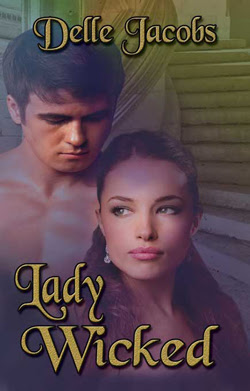
I re-designed my new cover with a very wide dark chocolate-colored border, the same used in the cover, and some tarnished gold trim, again the color from the cover. Chocolate and gold. Oh did this artist touch my soul! But for my purpose I needed border room to punch holes without cutting into the cover design. Imagine holes punched center top and bottom.

Next, I'll use either old gold colored ribbon- or whatever looks great- or maybe gold stretch cord to loop from hole to hole. I'll try knotting at the holes with dangling ends for beads and such. Or maybe I'll use little rings in pairs like sliding belts have. The card will take center stage as the page holder, and the beaded cords will dangle prettily outside the book. Meanwhile, my book cover and all my contact information, including a very short blurb, are right there, reminding the reader once again there's another great book out there waiting for her to read.


Right now it's sorting out the judges according to the categories they want to judge, and as always there are too many for the small categories and not enough for the one really large one.

Maybe later I'll tell you what it's like to coordinate a writing contest. Maybe you'll have a new perspective on them and maybe it will help you in entering, winning, and gaining an editor's attention.

Later. No time to think of that now. Think pleasant thoughts of me while I sweat despite the growing pains in my rear from too long at the computer. Hope you're having fun out there in the real world!

Delle

Monday, March 31, 2008

The Most Important Book You'll Ever Write


I'm not going to show you my most important book. You've never heard of it. There is one editor who has, and he's actually still around as an editor, but I'm not going to name him. I'm hoping, you see, that he doesn't remember he ever saw it.

It was called A TIGER PURRING (isn't that clever? I certainly thought so at the time.) The time was 1993 and this was the first full-length novel I actually finished. I'd always given up before. I was such a lousy typist, you see, and all I had was a portable typewriter with a broken "e" key. Imagine typing even a sentence without an "e". Unfortunately even the repair guy gave up trying to fix it. And I had another life as a working single parent making barely enough money to keep us in a roof and clothes. It took so long to get even a short story typed that didn't look like a chicken had used the page for its dirty work that I just couldn't justify it.

Then in 1993, my son built me a computer. We had them at work, but shared in groups of eight people, and two guys in our unit wouldn't get out of the chair long enough to let the rest of us learn. I was fascinated with them, yet kind of terrified too. My son responded to my gratitude by saying, "This is so you'll leave mine alone." Well, all right, I was sort of getting attached to his.

So I started plotting my story. Had a great plan. The first three chapters went very smoothly. Then the plot started drifting because there were, well, a few things I hadn't thought of in the beginning, and I could already tell I was going to have to go back and change some things. I had the sense to at least make notes of those and keep on going.

About halfway through, I was convinced my mind was dissolving. I had all kinds of threads going, and my story was not all that complex. I'd lose one thread while working on another. A different one would suddenly become impossible. The tangle grew and grew, and I was close to panicking. But I couldn't quit. I kept untangling knots, re-working, and even completely re-writing some parts. And the plot shifted in a completely different direction. I researched more, found a new angle, wrote, wrote, and wrote, and my hero and heroine grew. In the middle of it all, new story ideas started popping into my head, demanding to be written. Afraid to let go of the current story, I jotted down the ideas and rushed back to find out why a Tiger would be Purring.

Finally I reached The End. And I knew it wasn't the end after all, but I was sure a second draft would take care of that. Proudly, I revised, twice even, and hey, you know, it was pretty good. I sent it off to the unnamed editor, who I'd had the audacity to tell in my first editor interview, "I'm Delle Jacobs and I've never done anything like this in my entire life."

Well, it wasn't pretty good. Not horrible, but certainly not publishable, and the editor kindly pointed out that it was shot through with inconsistencies and inaccuracies, but he did see some real talent emerging. I re-read. He was right. And even more, I could tell the story was not salvageable as commercial fiction. It's still on my hard drive because I had the sense to convert it from my primitive word processing program to Word Perfect.

But I told you, this, my worst, most inexperienced, most primitive piece of fiction, is the most important book I've ever written. You must be wondering if I keep my marbles in a bag with a hole in the bottom. Maybe, but I'm right about this assertion. Here's why.

To begin with, the process of putting together something as complex and inter-woven as a full length novel re-wired my brain. I'd always been a multi-tasker, but something about going through this process gave me a new dimension. I'd learned something I might call Threading, a sort of process in which multiple linear lines can weave in and out of each other, always contributing to the whole. This was the point at which I became an author. Because my mind was different. I thought and organized thought in a wholly new way for me.

What I didn't know until later is, this is exactly what happens physiologically with drug addiction. The neurons get re-routed in the brain. No doubt, yes, I had also become addicted to the entire process. It was also true that every time I wrote a book, I went through the same physiological process a reader experiences, but on a more intense, more complex level, over a much longer time span.

But that rather awful book was even more important in other ways. From its roots and the knowledge gained in writing it sprang the next book, and the next, and next. The creative process spawned more creative thought, new ideas for new books. The first book showed me how to organize a novel. Because it was imperfect, I learned the things I needed to know to make the next book perfect (so I thought). I researched for more accuracy and better writing skills. Each new book presented a new challenge, something I had to learn or overcome, or something new I didn't know if I could do.

That's all still true. The chain of books goes on. And none since the first one could have been written if I hadn't done the first one. It may dwell forever in Dust Bunny Heaven, but it will always be the most important book I'll ever write.

You can't have a best seller without first writing a book. And all best sellers began when the author sat down to write his first book.

Friday, March 28, 2008

Yet More Snow!


Here I thought yesterday was some kind of record. Now one day later in spring, we had an even heavier snowfall this morning. And actually that makes snow three days in a row, considering we had snow before midnight on March 26th. I don't remember any time in my life in Southwest Washington I've seen snow falling on three consecutive days. Just to give you some more beautiful pictures, I've taken some closer shots of the pink camellia and flowering plum.

Jinx did stick herself out again beneath the eaves, for maybe a minute. She's seen far too much of the awful stuff this year to satisfy her.

Brings back memories of the strange winter of 2004-5, when we virtually had no winter, and no precipitation of any kind from mid December through the end of March. Jinx was only three years old then, and it had been more than a year since she had seen snow. Then the rain hit in downpours. But no more snow until the following January, three years since her last experience with it. No wonder she hates the stuff. Yet her curiosity forces her to check it out. Poor kitty. How her environment betrays her!

Thursday, March 27, 2008

Whether Weather or Not...


IT'S SNOWING! Unbelievable! Check the date: March 27th. It's more than officially spring here in Western Washington, the Land of Perpetual Spring. My pink camellia is in full bloom and so is the flowering plum, two beautiful shades of pink that are the signs winter is gone and summer on its way.

AND IT'S SNOWING! Giant flakes bigger than quarters, falling rapidly, covering the ground and rooftops! (Actually we had snow late last night but I wasn't quick with the camera, and didn't get any good pictures. It's much too warm to stick anyway.)

Yes, we do have snow here. In fact this year we had snow really early, in November, and on Christmas Day, another rarity. I've never seen snow on the ground on Christmas Day in the 30 years I've lived in Washington. And yes, I've seen snow in early March. But we've been assured of spring since late February this year, and had some lovely warm days.

Now, barely an hour later, there's no sign of the white stuff. It looks like it just rained, with drops of water still clinging to the drooping tips of the white pine needles. But I have photos to prove it happened!

Delle

Tuesday, March 25, 2008

An Unofficial Golden Heart & RITA list

Watch the new Golden Heart and RITA finalists on Judi Fennel's list here:

http://judifennell.wordpress.com/2008/03/25/the-golden-heart-calls-go-out-today/

Hurry, finalists, get your names in! this is a real kick for those of us who are so eagerly watching and waiting for our favorites to pop up! Yes, we know the official list comes out tomorrow, but it's so much fun to know ahead of time.

Delle

Friday, March 7, 2008

Setting up and printing a galley for an ARC

A "fun" topic, Amy! Your word processing program should actually do this for you automatically. But it can be extremely confusing anyway.

I use Word Perfect, so if you use Word, you might have to tweak my instructions to get what you want. They don't use the same terms.

The first thing I do is strip out unnecessary codes, which is why I use WP. But you can do the same thing by saving your document as an ASCII file. You might have to go back and re-indent paragraphs, though, so save your original version in case you end up with mess.

Set your manuscript in a nice font. Times New Roman is okay, but I usually want one less dense. I like Book Antigua or Bookman Old Style. Single space. Then in Page Set-Up, I set it as Landscape, two columns (which will become your two pages)with .5 inch margins all around. I like a header, which I often center on the page. Some programs allow you to put the title on one page and the author name on the opposite page. That's under Format.

For page numbering, I set it at Outside, Alternating.

The next changes come in setting it up to print. I happen to have two-sided printing but don't like to use it because it is very slow, and uses my ink hog printer instead of my lovely laser printer. So under Print>Layout, I set Manual, Step 1, Print odd pages. And then there's a little box below that says Print as booklet. DON'T miss this step or it will come out totally wrong!

You're going to print all of one side of the book, then turn the pages over and do Step 2, Print Even Pages.

Then when it is all done, you will cut your stack of pages down the exact middle and fold the two stacks in on themselves. Just like a book!

But in all honesty, don't do this. Get Kinko's to do the print set up. You should not worry about getting it to paginate right if you have it on a disk for them. Just stop at numbering the pages. They will see that they print in the correct order. Page 1 will still be page 1, page 239 will still be page 239. But they will be printed in a different order.

But if you do insist on printing it yourself, be sure to do a trial of about 12 pages as if it were the complete book. When you turn the stack of pages over to print the back side. it's altogether possible you could flip it wrong, and the back side will be upside down and out of order, too. Think of the paper waste if you don't do a trial to make sure you've got it right first!

In my book, Lady Wicked, there are 328 pages. The first page that prints would probably have page 328 on the left and page 1 on the right. When the back side is printed, page 327 would be on the left and 2 on the right. (it works out in multiples of 4). The second printed page would print page 326 on the left and 3 on the right, and so on.

Does that make sense? Feel free to ask more questions! I've been doing this for years, and I know enough to say the frustration is sufficient for me to have Kinko's do the actual printing.

Delle

Thursday, March 6, 2008

Printing an Advance Reading Copy for Reviewers

Amy Addison asked me to tell more about how Kinko's printed my ARCs. I didn't notice the comment till now, so I thought I'd explain how it goes today. My, how the old brain does start to scatter when a book comes out!

First, let me say this isn't something everybody in town can do just yet. I called around to office supply places I know that do good jobs for a reasonable place. Yes, they could do it, but some only in black and white, and some could only do a specific size, 8 1/2 x 11 inches. I didn't want that. I wanted something that looked like a real trade-size paperback book. I could do what they could do at home. I wanted something that reeked of professionality. So I called Kinko's expecting if they could do it, the cost would be totally out of sight. I was wrong. They only have one shop in town that could do it, and that meant going about 15 miles instead of just down the street, but that was no big problem.

I had already set my book up in galley format ( landscape orientation, two columns, double sided pages, page numbers on each "page") ) and had the cover art sized just right before going to Kinko's. But there's a mathematical formula for figuring out the width of the spine and I didn't have it. It's dependent on the weight of the paper the printer uses, as well as how many printed pages there will be. At best, I could have guessed, until I saw an actual printed copy. So I decided not to do a spine and back cover. Not for an ARC!

Then the text. That dimension is critical. I even know of a case where a publisher asked an author to add a considerable number of words to her finished book because the cover artist had made a mistake on the spine and it had been printed that way. Cheaper to get the author to do more work, you know.

Our local Kinko's has a POD printer, which means they can print any size book. I chose a perfectly useful, efficient size, which comes out the size of a half sheet of paper, less trimming.

The cover was printed separately, and when we were satisfied (we decided to use a different printer because it did the color more accurately) we printed one sample.

The machine is incredible. Once the document is uploaded- the set-up takes far more time than anything else, one prototype copy- the proof- is run.

The pages are printed, then the machine slaps a glue binding on it. The glue seems to dry instantly.

Remember all that stuff I told you about the mathematical formula for the spine? Well, that's how I would have done it. Kinko's has discovered the marvel of trial and error.

The printer eyeballed the cover, then headed off to a cutter to trim it. Then he took it back to the POD printer, where it was fed in and glued onto the book.

Guess what? It was wrong. about a quarter inch of the bare white spine lapped over onto the front. So he gave me that copy (which I gave to a friend). He measured how much off it was, then printed up a second book with second cover. That one came out perfect. We were satisfied. In less than two hours, they had my book all ready to go.

I could have stayed around to watch them crank out my four copies, but they couldn't guarantee they'd be able to do it right away. So we went off on other business instead of watching the Incredible POD Machine. Two hours later I got a call that my order was complete. And when I went back, there were FIVE copies, not four. They threw in the proof copy for no extra cost.

Kinko's charges a set-up fee of $25, and the cost per copy reduces with larger print runs. With the extra copies, I ended up paying around $14 per copy. That's perfectly economical for ARCs, although it would be a little high if I meant to sell them. But I don't plan to go in business in competition with my publisher, who will be sending printed ARCs to the reviewers they use regularly anyway. I just needed a rush job for one major reviewing magazine, and I ordered extras to have for emergency use.

Now that I have an actual copy in my hand, I could design a spine and back cover if I wanted, but why bother? This is a beautiful book that I'm not embarrassed to hand to a reviewer. And it totally amazes me what they can do now. This could not have been done locally five years ago, at any price. These POD machines are a huge investment, and the quality of their product is vastly improved. How the world is changing!